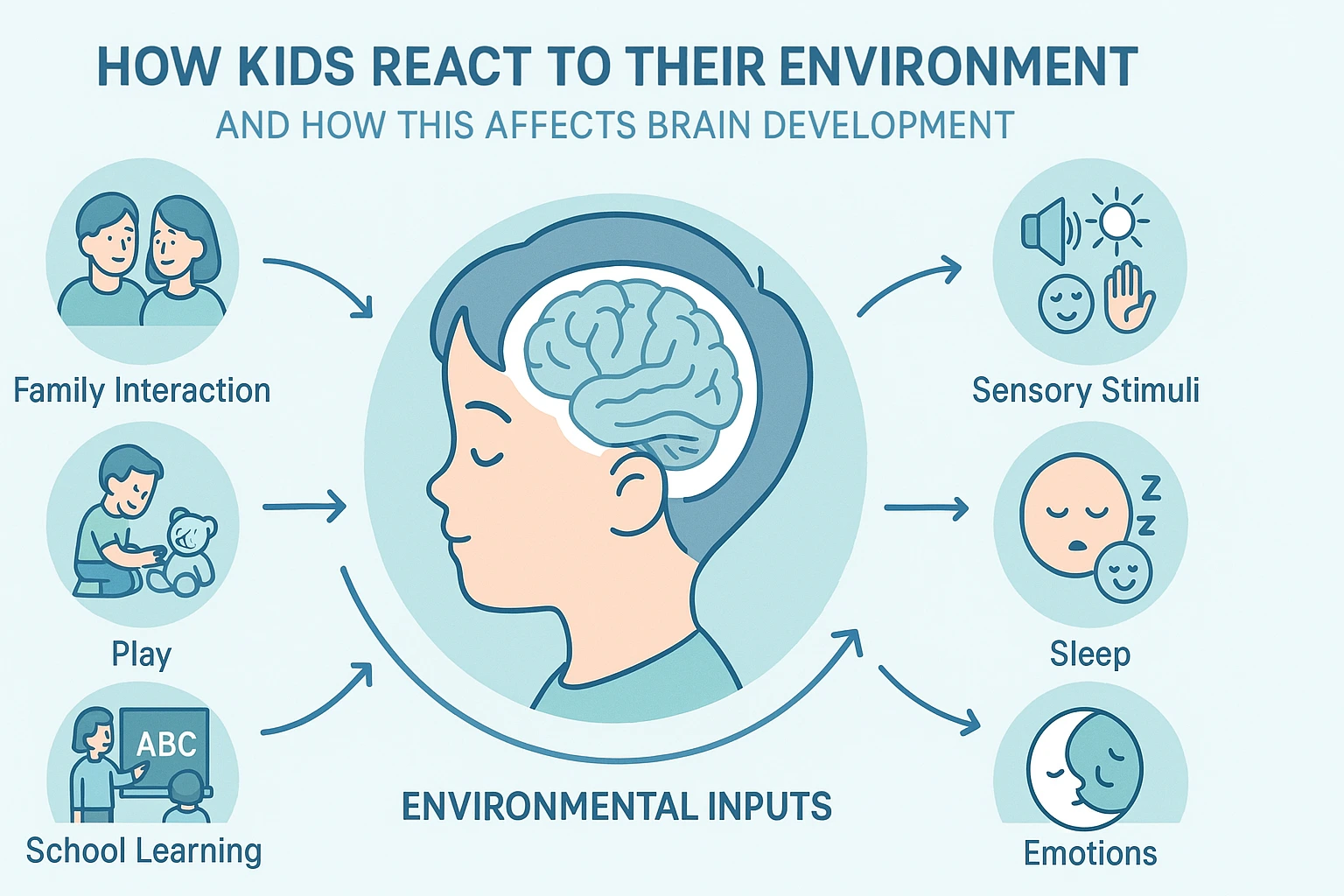
How Kids React to Their Environment: Understanding Brain Development
Children are constantly learning from the world around them. Every sound they hear, movement they see, emotion they feel, and interaction they experience plays an important role in shaping how their brain develops. A child’s reactions to their environment—whether curiosity, fear, excitement, or frustration—are not random. They are closely connected to how the developing brain processes information at different stages of growth.
Understanding how kids react to their environment helps parents, teachers, and caregivers support healthy brain development and identify early signs of concern when reactions seem unusual or delayed.
The Developing Brain: A Foundation for Reactions
A child’s brain is not a smaller version of an adult brain. It is a rapidly growing and changing organ. From birth through adolescence, billions of neural connections are formed based on experiences and environmental input.
In early childhood, the brain is especially flexible. This period is often called a “critical window” for development. During this time, the brain absorbs information quickly and learns how to respond to stimuli such as voices, facial expressions, touch, light, and sound.
Because different brain regions mature at different speeds, children may react strongly to situations that adults consider minor. This is normal and reflects ongoing brain development rather than misbehavior.
How Environment Shapes a Child’s Reactions
Sensory Experiences
Children are highly sensitive to sensory input. Bright lights, loud noises, strong smells, or unfamiliar textures can trigger strong reactions because the sensory processing areas of the brain are still developing.
Some children may appear overreactive, while others seem underresponsive. These reactions often improve as the brain learns to organize and filter sensory information over time.
Emotional Environment
A child’s emotional surroundings have a powerful influence on brain development. Supportive, calm, and predictable environments help strengthen areas of the brain responsible for emotional regulation.
On the other hand, constant stress, conflict, or fear can affect how the brain processes emotions, leading to heightened reactions such as anxiety, irritability, or withdrawal.
Social Interactions
Interactions with parents, siblings, and peers teach children how to respond socially. Smiles, eye contact, tone of voice, and gestures all help shape communication pathways in the brain.
Positive interactions encourage confidence and healthy emotional responses, while limited or negative interactions may delay social and emotional development.
Age-Wise Brain Development and Reactions
Infants (0–2 Years)
Infants react primarily through reflexes and basic emotions. Crying, smiling, startling at loud sounds, and calming with touch are all signs of early brain function. At this stage, consistent care and sensory stimulation help build trust and neural connections.
Toddlers (2–5 Years)
Toddlers begin to explore their environment actively. Their reactions can be intense because the emotional center of the brain develops faster than the area responsible for impulse control. Tantrums, curiosity, and rapid mood changes are common and usually normal.
School-Age Children (6–12 Years)
As the brain matures, children start understanding rules, cause and effect, and social expectations. Reactions become more controlled, though emotional responses may still be strong during stress or change.
Adolescents
Teenagers experience another phase of rapid brain development. Emotional reactions may intensify due to hormonal changes and ongoing development of decision-making areas of the brain.
Role of Learning, Play, and Routine
Play is one of the most powerful tools for brain development. Through play, children learn problem-solving, emotional regulation, creativity, and social skills. Unstructured play allows the brain to experiment and adapt to new situations.
Routine also plays a critical role. Predictable schedules help children feel safe and secure, allowing the brain to focus on learning rather than stress. When routines are disrupted, some children may react strongly, which is often a sign of developing emotional regulation rather than behavioral issues.
When Reactions May Signal a Concern
While variations in reactions are normal, some signs may indicate underlying neurological or developmental concerns. These include:
- Extreme sensitivity to sound, light, or touch
- Delayed speech or communication
- Poor eye contact or limited social interaction
- Persistent difficulty with balance or coordination
- Unusual emotional responses or lack of emotional expression
In such cases, early evaluation is essential. Consulting a Pediatric Neurosurgeon in Pune or a pediatric brain specialist can help identify whether a child’s reactions are linked to developmental delays, neurological conditions, or structural brain issues.
Importance of Early Medical Evaluation
Early diagnosis and intervention significantly improve outcomes in children with brain-related conditions. A qualified Pediatric Neurosurgeon in Pune works alongside pediatricians, neurologists, and therapists to assess brain development and guide appropriate treatment or monitoring.
Parents should never ignore persistent or worsening behavioral changes, especially when they interfere with learning or daily activities. Seeking expert guidance provides clarity and reassurance.
Supporting Healthy Brain Development at Home
Parents play a vital role in shaping how children react to their environment. Simple steps can make a big difference:
- Encourage open communication and emotional expression
- Provide a safe, calm, and nurturing environment
- Limit excessive screen time and promote physical activity
- Ensure proper nutrition and adequate sleep
- Engage in regular play and learning activities
These habits strengthen neural pathways and support balanced emotional and cognitive development.
Final Thoughts
Children’s reactions to their environment are a window into how their brains are developing. Understanding these reactions helps parents respond with patience, empathy, and informed support. While most variations in behavior are part of normal growth, timely medical attention can make a critical difference when concerns arise.
Choosing experienced specialists, including the Best Neurosurgeon in Pune, ensures that children receive accurate diagnosis, advanced care, and long-term support for healthy brain development.
By nurturing both the environment and the developing brain, we help children grow into emotionally resilient, confident, and healthy individuals.
Frequently Asked Questions
- Why do children react strongly to small changes in their environment?
Children’s brains are still developing, especially the areas responsible for emotional control and sensory processing. This makes them more sensitive to environmental changes.
- Is it normal for kids to react differently to the same situation?
Yes. Every child’s brain develops at a unique pace, which influences how they process emotions, sounds, and social interactions.
- Can the environment affect a child’s brain development?
Absolutely. A safe, nurturing, and stimulating environment supports healthy brain development, while chronic stress can affect emotional and cognitive growth.
- When should parents worry about unusual reactions in children?
If reactions are extreme, persistent, or interfere with learning, speech, or movement, it is important to seek medical evaluation.
- Who should I consult for brain development concerns in children?
A pediatric brain specialist or Pediatric Neurosurgeon in Pune can assess neurological development and guide appropriate care.